Hyundai Santa Fe Facelift: Hyundai is preparing a significant mid-cycle update for one of its most important global SUVs. The Hyundai Santa Fe Facelift has been spotted testing ahead of its expected debut in late 2026 or early 2027, and early spy images suggest that this won’t be a minor refresh. Instead, Hyundai appears to be addressing criticism of the current generation by reworking the design, improving mechanical components, and expanding electrification options. For India, the facelifted Santa Fe is expected to arrive in 2027, aligning with Hyundai’s aggressive plan to introduce 30 new models in the country over the coming years.
Hyundai Santa Fe Facelift Exterior Design: From Boxy to Balanced
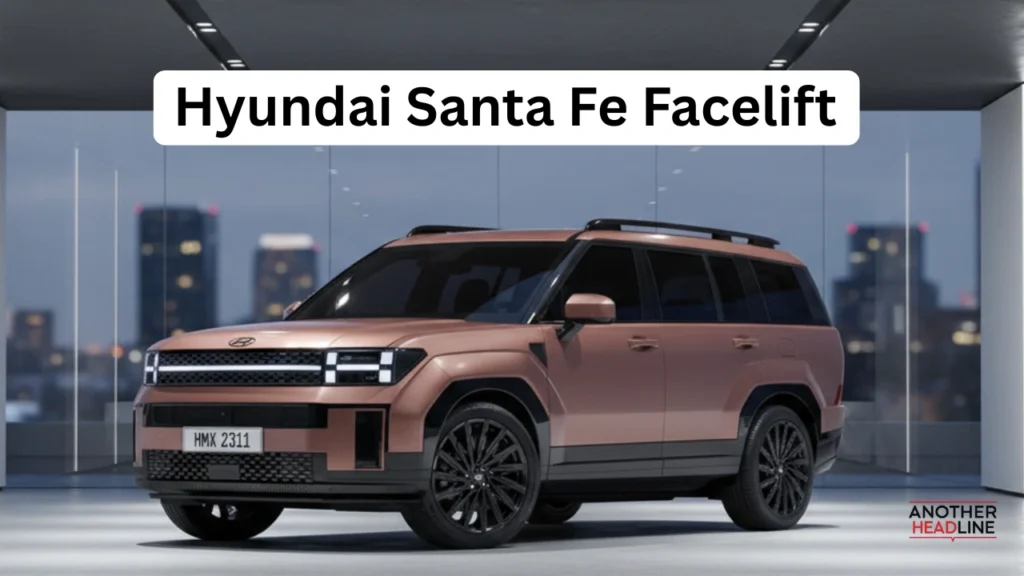
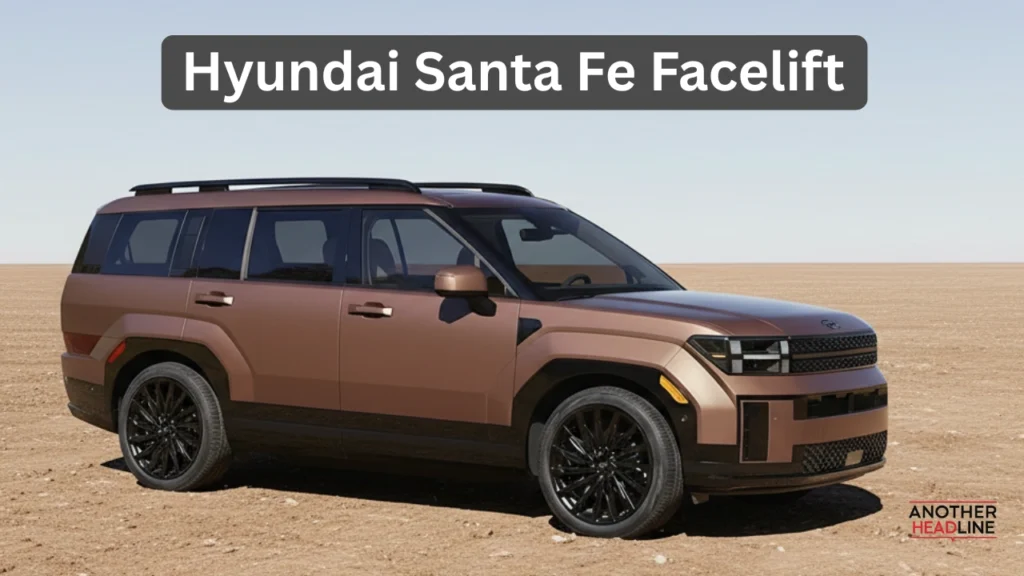
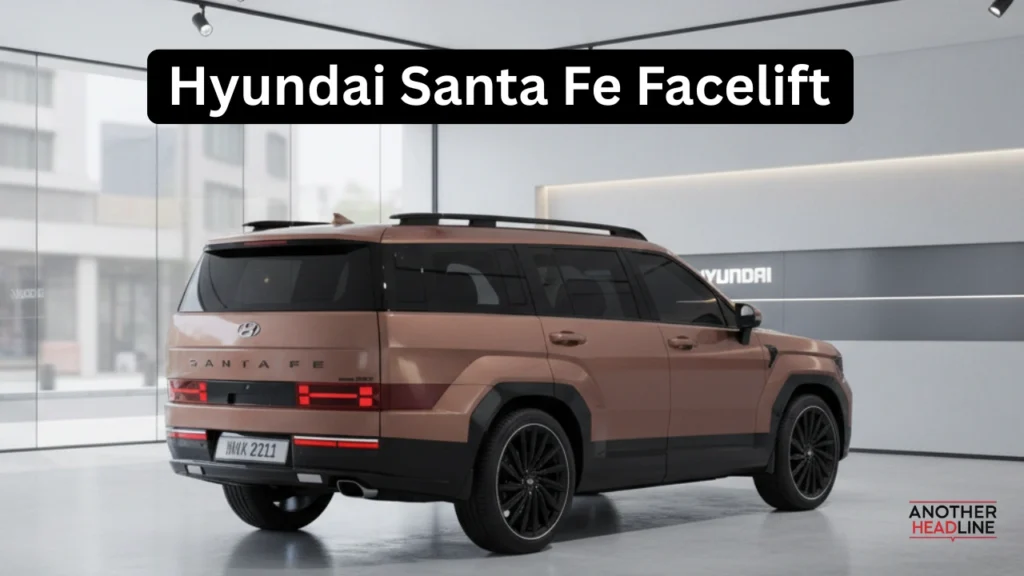
Spy shots and early renderings indicate that the Hyundai Santa Fe Facelift will adopt a cleaner and more aerodynamic appearance, inspired by Hyundai’s latest “Art of Steel” design philosophy.
Expected exterior updates include:
- Redesigned front fascia with slimmer lighting elements
- Vertically stacked daytime running lights, similar to the Palisade
- Headlamps repositioned lower in the bumper for a modern SUV look
- A refined grille with simpler horizontal elements
- Smoother body panels that reduce visual bulk
- Newly designed alloy wheels
- Updated rear design with vertically oriented taillights
- Full-width horizontal brake light bar at the rear
- Relocated license plate for a more premium appearance
Overall, the facelift moves the Santa Fe closer to Hyundai’s flagship SUVs like the Palisade and Tucson, making it look less rugged and more upscale.
Also Read
Hyundai Santa Fe Facelift Interior Updates: Tech Takes Center Stage
While the basic cabin layout is expected to remain familiar, the facelifted Santa Fe will likely introduce meaningful technology upgrades.
Expected interior highlights:
- New free-standing touchscreen infotainment system
- Redesigned digital instrument cluster
- Introduction of Pleos Connect, Hyundai’s next-generation infotainment platform
- Android Automotive-based architecture with better app support
- Over-the-air (OTA) updates for infotainment and vehicle systems
- Gleo AI-based voice assistant for smarter controls
The Pleos Connect system is a major shift, replacing Hyundai’s older navigation cockpit software and enabling smoother third-party app integration.
Hyundai Santa Fe Facelift Powertrains: Hybrid Focus and Mechanical Fixes
Electrification is expected to play a central role in the Hyundai Santa Fe Facelift, especially for markets like India.
Expected powertrain options:
- 1.6-litre turbo-petrol hybrid engine
- Front-wheel drive (FWD) and all-wheel drive (AWD) options
- Six-speed automatic transmission for hybrid variants
In addition, Hyundai has confirmed a crucial mechanical update for petrol models.
Key mechanical change:
- The controversial eight-speed dual-clutch transmission (DCT) will be replaced
- A smoother torque-converter automatic gearbox will be introduced
- Aimed at improving low-speed drivability and long-term reliability
This move comes after customer feedback and complaints regarding jerky performance in the outgoing setup.
Advanced Electrification: EREV Possibility
Beyond standard hybrids, Hyundai is reportedly testing more advanced electrified versions of the Santa Fe.
What’s being tested:
- Plug-in hybrid (PHEV) variants
- Possible Extended-Range Electric Vehicle (EREV) version
- Potential range of over 900 km on a full charge and fuel tank
- Petrol engine acting as a generator rather than driving the wheels directly
If introduced, this could position the Santa Fe as one of the most technologically advanced SUVs in its segment.
India Launch and Market Positioning
The Hyundai Santa Fe Facelift is expected to launch in India in 2027 as a premium SUV positioned above the Tucson.
Market context in India:
- Will compete in a fast-growing premium SUV segment
- Rivals include Toyota Fortuner, Skoda Kodiaq, Volkswagen Tiguan, Honda’s upcoming SUVs, and MG models
- Hyundai aims to attract buyers looking for a tech-rich alternative to traditional ladder-frame SUVs
The introduction of hybrid technology could give Hyundai a strong edge in fuel efficiency and emissions compliance.
Why This Facelift Matters
The facelift represents more than a cosmetic update. It is Hyundai’s opportunity to:
- Address criticism of the current Santa Fe’s design
- Improve drivability with a better transmission
- Align the SUV with Hyundai’s modern design language
- Strengthen its hybrid and electrification strategy
In a segment dominated by established players like the Fortuner, the Santa Fe needs a strong identity—and this facelift appears to be a step in the right direction.
Final Thoughts
The upcoming Hyundai Santa Fe Facelift looks set to be one of the most comprehensive mid-cycle updates Hyundai has delivered in recent years. With a redesigned exterior, smarter interiors, improved mechanicals, and a strong focus on hybrid technology, the SUV could be far more competitive than its predecessor. If Hyundai prices it strategically in India, the Santa Fe could emerge as a compelling premium SUV choice when it arrives in 2027.