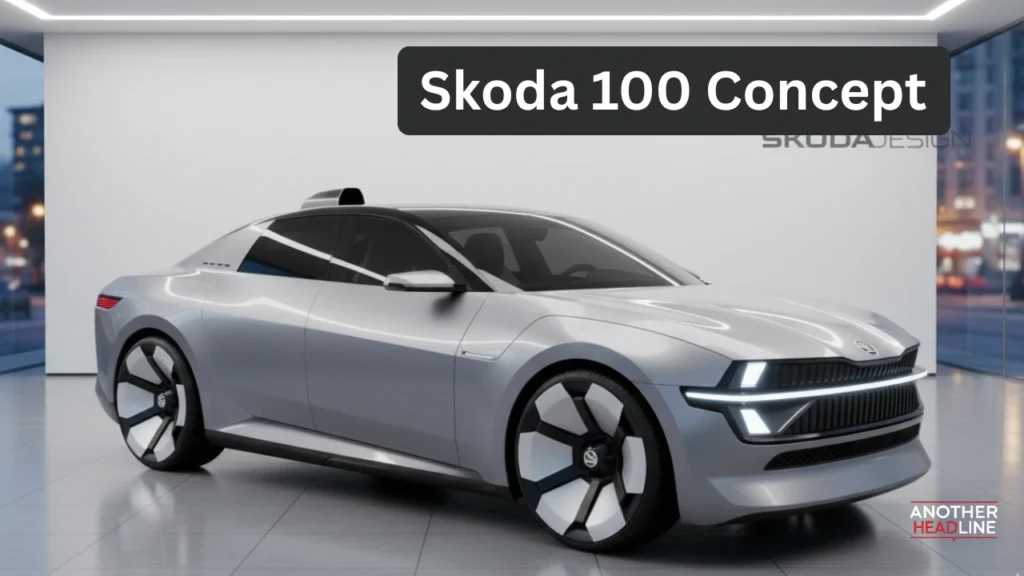
Skoda 100 Concept: Czech automaker Skoda has sparked global excitement with the reveal of the Skoda 100 Concept, a bold electric reinterpretation of one of its most beloved classics — the original Skoda 100 sedan (1969–1977), the first model in the brand’s history to cross one million sales. Unveiled under the brand’s “Icons Get a Makeover” initiative, this design study blends emotional nostalgia with a daring vision of what the Skoda 100 could look like in the electric age.
While Škoda has clearly stated there are no production plans, the concept showcases how heritage cues, futuristic proportions and modern EV thinking can converge to form a stunning next-generation saloon.
Skoda 100 Concept Design Philosophy: Past Meets Future — Without Retro Replication
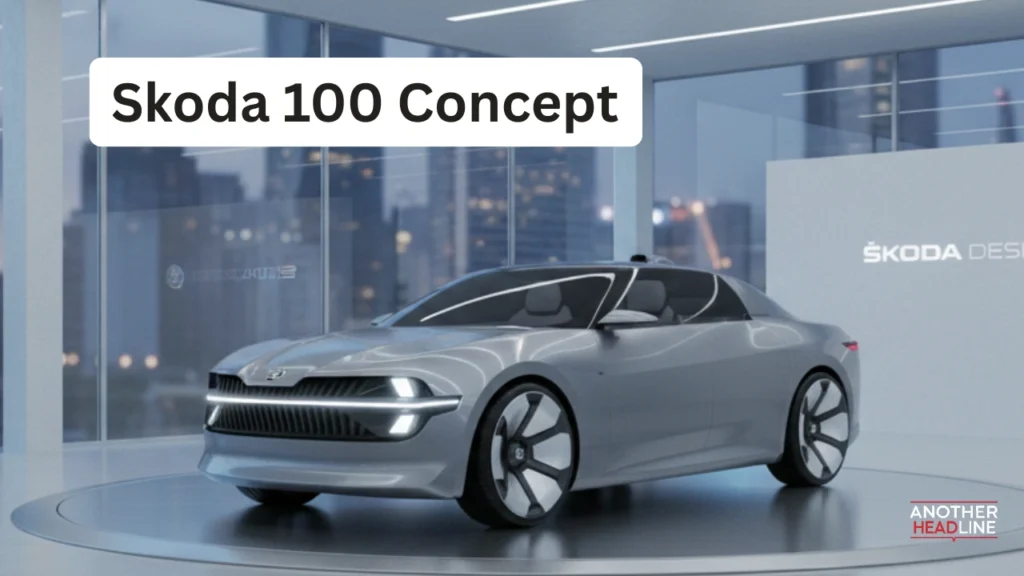
The Skoda 100 Concept was led by exterior designer Martin Paclt, who set out to capture the spirit of the original, not clone it. Instead of leaning into pure retro styling, the goal was to reinterpret the 100’s stance, silhouette and personality through Škoda’s Modern Solid design language.
Key exterior inspirations reimagined:
Also Read


- Familiar four-door saloon format
- Smooth, uninterrupted surfacing with clean sheet-metal sculpture
- Chunky shoulders and a taller bonnet for a powerful presence
- Proportions comparable to a modern Skoda Superb, placing it firmly in the large-sedan class
This creates a confident, emotional design that feels familiar yet thoroughly futuristic.
Skoda 100 Concept – Striking Lighting & New Visual Identity
Lighting is one of the biggest storytelling elements.
Front styling highlights:
- Full-width LED light bar replacing the conventional grille
- Integrated Skoda script across the fascia
- Quad-headlamp signature — a subtle nod to the original 100
Rear styling reflects the same design theme:
- Matching full-width rear light bar for visual symmetry
This marks a decisive shift from Skoda’s upright grille-centric look, hinting at the future aesthetics of the brand’s upcoming EVs.
Skoda 100 Concept – Radical Windowless Rear With Roof-Mounted Air Intake
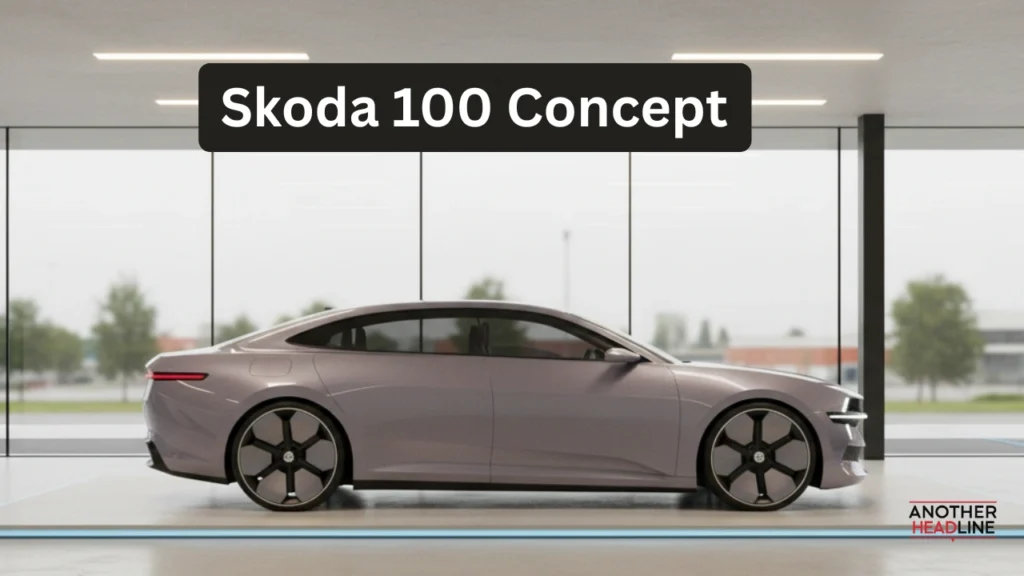
Arguably the most daring feature is the complete removal of the rear window. The original Skoda 100 was known for its nearly identical rear and front glass sections — and designer Paclt flipped that idea into something groundbreaking.
Rear design engineering & styling elements:
- Smooth, sculptural rear surface mirroring the front
- Roof-mounted air intake above the rear cabin
- Cooling vents integrated into rear quarter panels
This setup channels airflow to the rear-mounted EV drivetrain, paying tribute to the classic 100’s rear-engine architecture, while presenting an emotionally provocative new visual identity.
Electric Drivetrain — A Modern Nod to the Classic Layout
Skoda did not publish technical specifications, but it confirmed the concept’s drivetrain layout:
- Rear-mounted electric motor
- Rear-wheel-drive configuration
This mirrors the original Skoda 100’s rear-engine, RWD format, but translates it into a future-proof EV blueprint. The package is imagined on a platform based on the current Skoda Superb, giving the concept realistic scale and proportions.
Part of Skoda’s Broader Heritage-Reinvention Journey
The Skoda 100 Concept continues the brand’s design program that reimagines legacy models for the future. Previous reinterpretations include:
- Favorit
- Felicia
- 110 R
- 1000 MBX
Among them, the 100 Concept stands out for its emotional connection, representing the everyday family car that shaped Czech motoring culture.
Final Verdict
The Skoda 100 Concept blends past and future beautifully — retaining the warmth of a 1960s family favourite while embracing progressive EV design. With its sculptural styling, windowless rear profile, dramatic lighting signature and rear-mounted electric drivetrain philosophy, the concept isn’t just a nostalgic tribute — it’s a bold statement about design freedom in the electrified era. Though it will never enter production, the lessons learned from this project are expected to shape future Skoda EVs, ensuring that heritage continues to influence innovation.